
Recent research from the Nieman Lab in America highlights the decline in local news, revealing that US states with fewer local journalists have higher rates of loneliness. At first glance, this appears to be a story about the USA’s media landscape, but the underlying message is universal: when people lose access to local stories, a shared sense of identity, and trusted sources of community information, loneliness rises, which is felt sharply by older people.
Data shows that the UK is facing its own local news crisis; over the past 20 years, local journalism has declined dramatically. The Cairncross Review (2019), commissioned by the then-UK Prime Minister Theresa May, warned of emerging 'news deserts' resulting in communities where residents no longer have access to information about what is going on in their area. This means the issue moves from a media problem to a community problem. Local news does more than report events: it creates belonging, keeps people updated on what is happening in the community, and creates a sense of connection.
For many older people, local news can be a lifeline; it's how they stay connected with their neighbours and their local community, hear about events, local services, and share stories. Many older people face another disadvantage – they're losing access to trusted offline sources of information and are less likely to access news online. In fact, data from the Re-engage 2025/2026 annual survey shows that while 64% of older people have access to the internet, only 22% go online often. So, when local newspapers disappear, older people are adversely affected and are disconnected from their communities.
This raises an important question - where does this leave organisations like Re-engage? Our volunteers and staff help rebuild connections, grow friendships, build local networks, and nurture opportunities for older people to feel part of their community. Importantly, we provide offline connections in an increasingly digital-first world. While this isn’t a replacement for local and regional journalism, it’s a response to the same structural issue that decline in local journalism creates - the erosion of community connection.
Decision-makers should recognise local news as part of the loneliness prevention infrastructure: that accessing community information is a preventative factor against loneliness. Media organisations should be encouraged to consider older audiences as digital-first models expand, ensuring older people are not excluded from local information. There is also scope for UK-specific research, replicating the Nieman study and exploring the impact of the decline of local news on older people and the link to social isolation and loneliness.
While the decline in local news is often framed as a threat to democracy, it is also a threat to belonging, community identity, and what helps keep older people connected.
-
View

More news
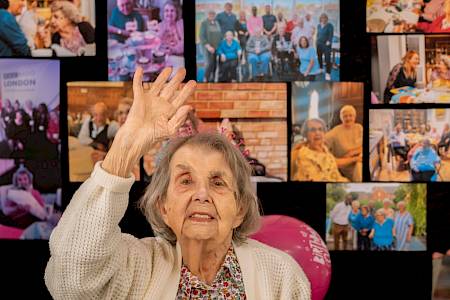
Big birthday wishes for Barbara!
Join us in celebrating a very special Re-engage tea party guest's 100th birthday.
By Re-engage

Re-engage founder is a winner!
Our heartfelt congratulations to Trevor Lyttleton MBE for scooping the Lifetime Achiever Award at the 2026 National Diversity Awards.
By Re-engage